
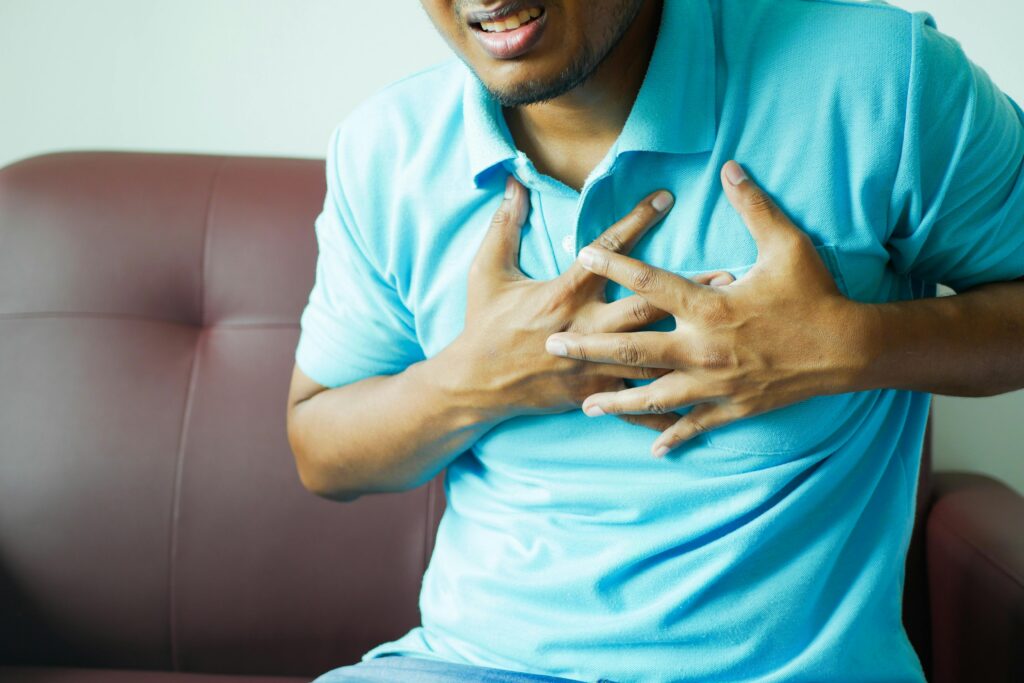
Heart attacks — also known as myocardial infarctions — are medical emergencies that require immediate attention. Every second counts and recognizing the symptoms can save your life or someone else’s.
What Is a Heart Attack?
A heart attack occurs when blood flow to part of the heart muscle becomes blocked, usually due to a buildup of plaque in the coronary arteries. Without oxygen‑rich blood, the affected heart muscle begins to die. The sooner treatment begins, the better the chances of survival and recovery.
Common Symptoms of a Heart Attack
The most common symptom is chest pain or discomfort, often described as:
- Pressure
- Tightness
- Squeezing
- Heaviness
- Burning
- Crushing pain
Other symptoms may include:
- Shortness of breath (before or with chest discomfort)
- Pain or discomfort in the arms, shoulders, neck, jaw, or back
- Cold sweat
- Nausea or vomiting
- Indigestion or heartburn
- Light‑headedness or fainting
- Unusual fatigue or weakness
- Anxiety or a sense of impending doom
Symptoms in Women
Women may experience subtler symptoms, such as:
- Chest discomfort rather than sharp pain
- Fatigue
- Nausea
- Jaw or back pain
These symptoms are just as serious and should never be ignored.
What to Do If You Suspect a Heart Attack
- Call 9‑1‑1 immediately — do not wait to see if symptoms improve.
- Do not drive yourself; emergency responders can begin treatment on the way to the hospital.
- Stay calm and rest while waiting for help.
Half of all heart attack deaths occur within the first two hours of symptom onset. Quick action can save a life.
Recovery and Prevention
After a heart attack, the heart may be weakened. Recovery often includes:
- Cardiac rehabilitation: A supervised program involving exercise, nutrition guidance, and stress management
- Lifestyle changes: Healthy eating, quitting smoking, and regular physical activity
- Medication: To manage blood pressure, cholesterol, and reduce the risk of future attacks
Heart attacks remain one of the leading causes of death in North America. Awareness, early recognition, and fast action are essential for survival. Share this information widely — it could save a life.
For More Information