
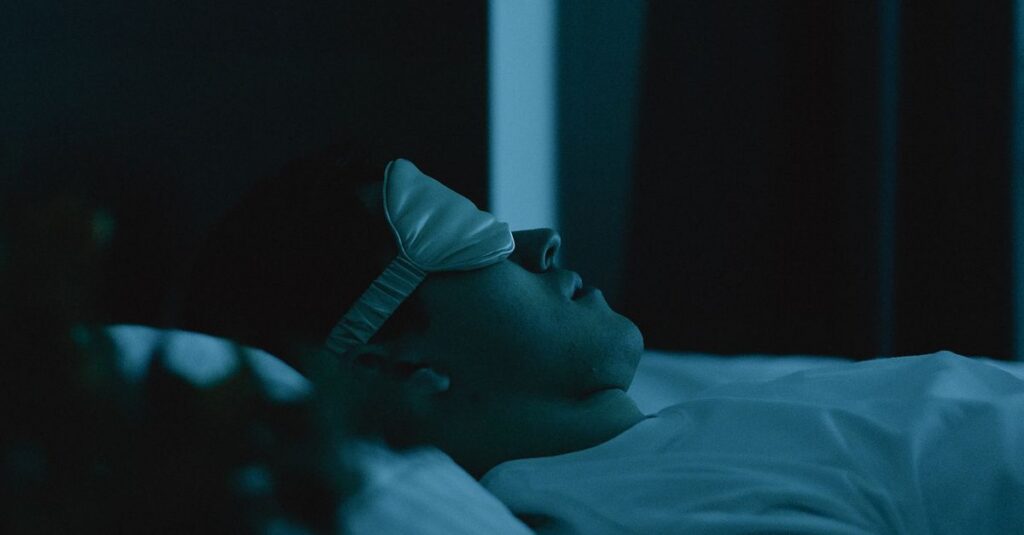
Getting enough sleep isn’t just about how long you’re in bed for—it’s also about the environment you sleep in, which can either help or hinder the quality of your sleep.
Research shows that sleeping in a bedroom that is dark, cool, and comfortable can significantly improve sleep quality, helping your body recover, recharge, and function at its best.
Let’s explore why darkness and coolness matter so much when it comes to getting a good sleep:
Why Darkness Matters
- Your body is naturally wired to respond to light and darkness. Darkness signals your brain to produce melatonin, the hormone that helps you fall asleep and stay asleep.
- Even low levels of light, like a TV, phone, or streetlight, can disrupt your sleep cycle, keeping you in lighter, less restorative stages of sleep.
This means that sleeping with lights on—or even small light sources in the room—can quietly reduce sleep quality without you realizing it.
Simple Tips for Sleeping Well in the Dark
- Use blackout curtains or an eye mask to help your brain switch off quicker.
- Turn off or cover electronics giving off light in your room.
- Limit screen use before bed to give yourself time to wind down.
Why a Cool Room Helps You Sleep Better
- Now let’s talk about temperature. Your body temperature naturally drops in the evening to help you prepare for sleep. A cooler environment supports this process.
- Experts recommend a bedroom temperature of about 15–19°C (60–67°F) for optimal sleep. On the flipside, rooms that are too warm can disrupt deep sleep and increase nighttime awakenings.
Sleeping in a cool room helps your body stay in deeper, more restorative sleep stages.
Simple Tips for Sleeping Well in a Cool Room
- Lower your thermostat before bedtime
- Use breathable bedding (like cotton) instead of wool or silk
- Avoid heavy blankets if you tend to overheat.
Why Good Sleep Matters for Your Health
Sleep is not just an act of rest—it’s a function your body performs while it actively works to maintain your overall health.
When you get quality sleep on a regular basis, you are supporting:
- Brain function and memory
- Mood and mental health
- Immune function and recovery
- Heart and metabolic health.
Poor sleep, on the other hand, can impact focus, increase stress, and contribute to long-term health risks.
If you’ve been struggling to get the sleep you need, try sleeping in a dark, cool room from now on. Look forward to falling asleep faster, staying asleep longer, and waking up fully refreshed to tackle your day.
For More Information
Module 6. Improving Your Sleep and Alertness, Create a Good Sleep Environment | NIOSH | CDC
Sleep in the Dark: The Science Behind Nighttime Darkness and Better Rest
Sleep Environment Optimization: Temperature, Light, Noise, and Bedding Science – OptimalSleep
Improve Sleep: Tips to Improve Your Sleep When Times Are Tough | NIOSH Science Bulletin | CDC