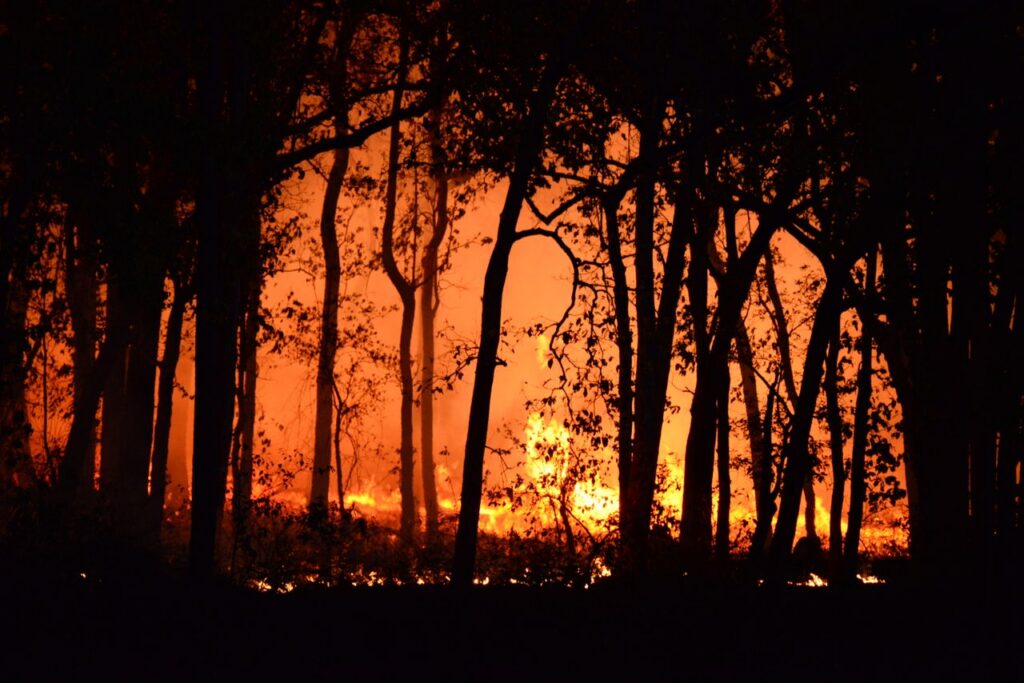
Wildfire season is becoming an increasingly significant health concern across Canada and the United States. Even if you are far from an active wildfire, smoke can travel long distances and affect air quality in communities hundreds or even thousands of kilometres away.
What makes wildfire smoke harmful?
Wildfire smoke is a mixture of gases, chemicals, and tiny airborne particles released when trees, plants, buildings, and other materials burn.
One of the greatest health concerns is fine particulate matter (PM2.5). These particles are small enough to penetrate deep into the lungs and may enter the bloodstream, potentially affecting both respiratory and cardiovascular health.
Even short-term exposure to elevated smoke levels can cause symptoms, especially among individuals with underlying health conditions.
Health effects of wildfire smoke
- Respiratory effects
Wildfire smoke can irritate the respiratory system and may cause:
- Coughing
- Sore throat
- Wheezing
- Shortness of breath
- Increased mucus production
- Aggravation of asthma and other lung conditions.
- Cardiovascular effects
Exposure to fine particulate matter may also affect the heart and circulatory system. Individuals with pre-existing heart conditions may be particularly vulnerable during periods of poor air quality.
- Mental health impacts
Wildfires can affect more than just physical health. Prolonged smoke events and concerns about personal safety, property, or loved ones can contribute to:
- Increased stress
- Anxiety
- Sleep disturbances
- Reduced overall well-being.
Taking care of your mental health is just as important as protecting your lungs during wildfire season.
How to protect yourself
- Monitor air quality
Check local air quality reports and advisories regularly. Air quality conditions can change quickly depending on weather patterns and wildfire activity.
- Reduce outdoor activity
When air quality is poor, limit strenuous outdoor activities such as running, heavy yard work, or intense exercise.
- Keep indoor air clean
Help reduce smoke exposure indoors by:
- Closing windows and doors when smoke levels are high
- Using air conditioning on recirculation mode, if available
- Running a HEPA air purifier
- Avoiding activities that create indoor air pollution.
- Stay hydrated
Drinking water can help relieve throat irritation and support overall wellness during smoky conditions.
- Use appropriate respiratory protection
If outdoor exposure cannot be avoided, a properly fitted N95 respirator may help reduce inhalation of fine smoke particles.
Wildfire smoke is becoming an increasingly common challenge across North America. Even when a fire is not nearby, smoke can still affect air quality and your health.
By staying informed, monitoring air quality, and taking steps to limit exposure, you can help protect your lungs, heart, and overall well-being throughout wildfire season.
Sources
• EPA Wildfire Smoke Course
https://www.epa.gov/wildfire-smoke-course
• Wildfires | CDC
https://www.cdc.gov/disasters/wildfires
• Canadian Centre for Occupational Health and Safety (CCOHS)
https://www.ccohs.ca
• Public Health Agency of Canada
https://www.canada.ca/en/public-health.html